Greenland used to sit, geopolitically speaking, at the edge of the map: a vast, sparsely populated island whose strategic value was mostly a Cold War memory of bombers and early-warning radar. In the new era, defined by renewed great-power rivalry, contested supply chains, and a warming Arctic, Greenland is becoming something else: a hinge between North America and Europe, a prospective storehouse of critical minerals, and an arena where rules-based governance is being stress-tested.
Three forces drive that shift.
First, geography. Greenland lies across the Greenland–Iceland–UK gap (the GIUK gap), a historic choke-point for naval and air movements between the North Atlantic and the Arctic. Second, technology. Missile-warning, space surveillance and undersea infrastructure have made high-latitude awareness a frontline requirement, not a specialist interest. Third, economics under duress. If the past decade taught policymakers anything, it is that concentration risk, whether in energy, semiconductors or rare earths, becomes intolerable the moment geopolitics turns adversarial.
Greenland sits uncomfortably at the intersection of all three.
A Military Asset Disguised as a Territory Debate
The most tangible expression of Greenland’s security relevance is the American base at Pituffik (formerly Thule) in northwest Greenland. It is operated by the U.S. Space Force and hosts missile-warning and space-surveillance capabilities central to homeland defence. The base’s radar mission (early warning and tracking of ballistic missile threats) anchors its enduring importance even as the number of permanently stationed personnel is far smaller than during the Cold War.
This is not merely about hardware.
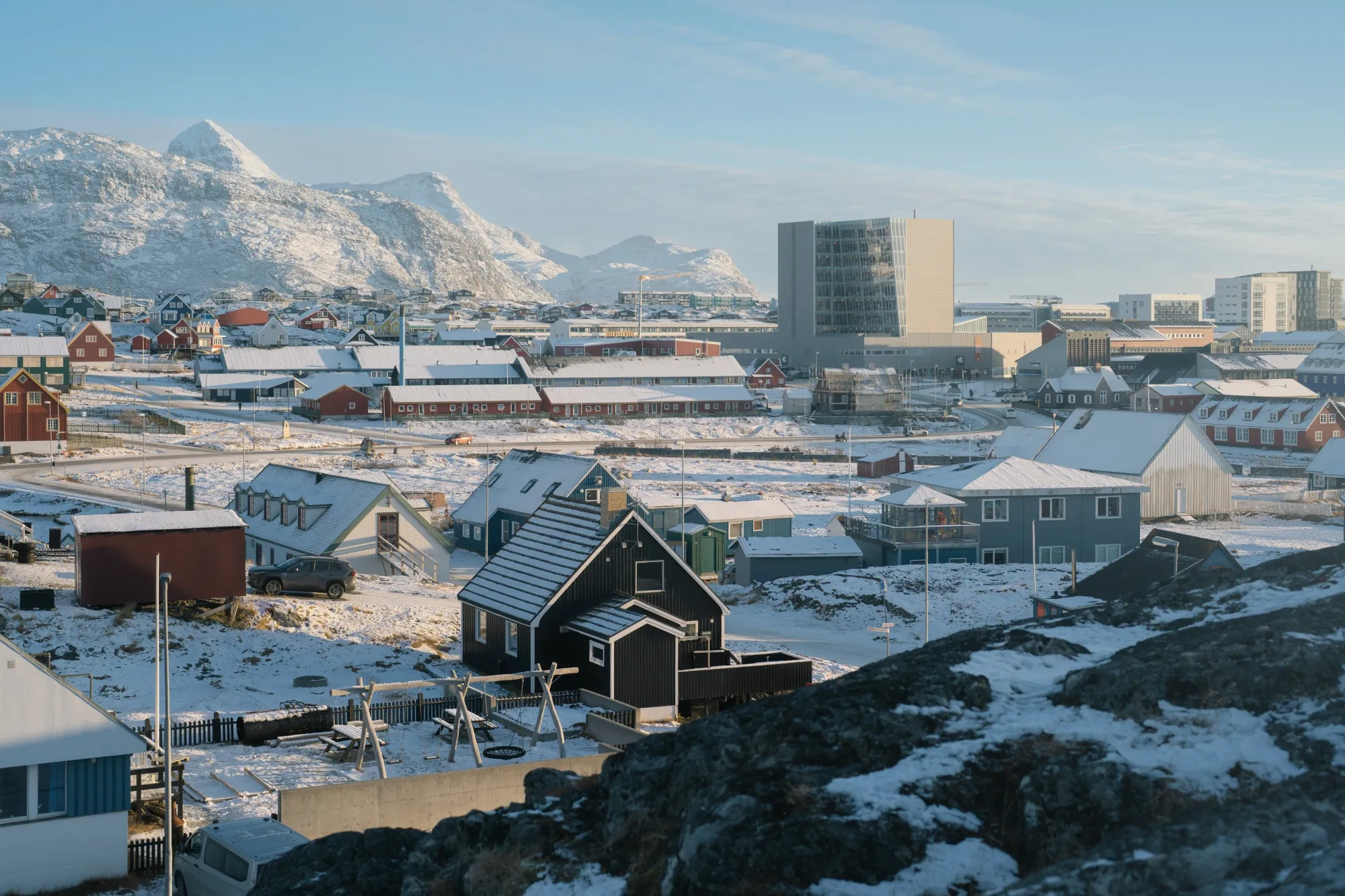
Greenland’s location matters more as the geography of threat changes. As competition with Russia and China intensifies, the “short arc” over the Arctic again becomes strategically salient: for long-range aviation, missile trajectories, submarines, and the monitoring of activity in the North Atlantic and Arctic approaches. The U.S. Department of Defense’s recent Arctic strategy emphasises a monitor-and-respond posture alongside allies and partners, precisely because the Arctic is no longer peripheral to deterrence and domain awareness.
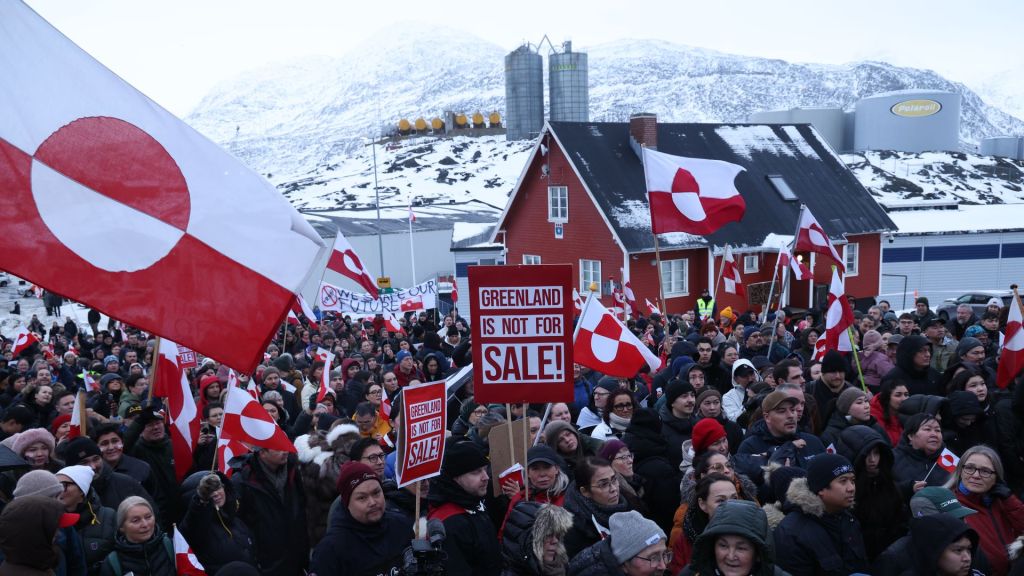
Yet the politics surrounding that security posture are now volatile. In recent days, a renewed wave of rhetoric in Washington about acquiring Greenland has triggered visible European pushback and an unusual burst of alliance signalling, including calls for NATO to coordinate more actively in the Arctic. Whatever one thinks of such rhetoric, its second-order effects are real: it forces Denmark and Greenland to clarify red lines; it invites Russia and China to frame themselves as guardians of sovereignty against Western coercion; and it tests whether NATO can keep Arctic security aligned with alliance unity rather than intra-alliance friction.
For Greenlanders, the sovereignty question is not academic. Greenland is a self-governing territory within the Kingdom of Denmark, and Danish law explicitly recognises the Greenlandic people’s right of self-determination, with independence ultimately a Greenlandic choice. However, the fiscal arithmetic of self-rule is constraining. Denmark provides a large block grant, on the order of several billion Danish kroner annually, commonly cited around the equivalent of roughly $500m and representing a substantial share of public finances—making any rapid move to full independence economically difficult without a new revenue base. This is where minerals and security rents re-enter the story.
Minerals: The Allure, and the Trap, of Strategic Autonomy
The case for Greenland as a minerals frontier is simple: it is believed to hold a meaningful endowment of critical raw materials, rare earths among them, at a time when the West is trying to reduce dependency on China-dominated supply chains. Reuters reporting in January 2026 frames Greenland as home to a wide range of potentially strategic minerals (rare earths, graphite, copper, nickel, zinc, uranium, titanium, gold and diamonds), while noting just how much of Greenland remains underexplored.
However, the case for Greenland as a near-term supply-chain solution is weaker than the rhetoric implies. Mining in Greenland faces obstacles that are not easily legislated away: remoteness, limited infrastructure, harsh conditions, high operating costs, long permitting timelines, and, critically, local politics around environmental risk and social licence. Kvanefjeld (Kuannersuit), the best-known rare-earth project, has been politically contentious because of associated uranium and thorium. Those politics have legal and financial bite: the owner of the project has pursued very large claims against Danish and Greenlandic authorities, illustrating that strategic projects can become liabilities for small polities with limited fiscal buffers.
Other projects, such as Tanbreez, are at an earlier stage but draw growing attention from the critical minerals policy ecosystem in Washington and Brussels. CSIS notes that Tanbreez has advanced through preparatory assessment work recently, but it remains some distance from production. In other words: Greenland’s mineral potential is strategically important, but it is not a quick fix. The value lies as much in optionality of diversifying future supply as in immediate volume.
There is also a subtler trap. If Greenland becomes a pillar of Western “de-risking,” it will face intense pressure to choose partners, structure offtake, and accept infrastructure financing. That is precisely the terrain where China has been most effective globally: not by owning mines everywhere, but by shaping the downstream ecosystem of processing, refining, magnet-making, and the financing structures that bind producers to buyers. The West’s vulnerability is the industrial chain. So even a successful Greenland mining story would still require allied investment in processing capacity, environmental compliance, and long-term off-take arrangements to avoid replicating dependency in another form.
Shipping and Undersea Infrastructure: The Arctic’s New Global Commons
Climate change is turning the Arctic from a geographic barrier into a seasonal corridor. That does not mean container shipping will reroute overnight; insurers, ice-class requirements, search-and-rescue constraints and uncertain ice conditions remain binding. Nonetheless, it does mean that trade security planners must treat the Arctic as a plausible alternative and a strategic theatre, especially after recent disruptions to traditional routes have made resilience fashionable again.
Russia has positioned the Northern Sea Route (NSR) as an economic and strategic project, and reporting indicates that transit activity has been rising, albeit from a low base compared with Suez or Panama. China’s official Arctic policy explicitly endorses development of Arctic shipping routes and a Polar Silk Road concept, framing Arctic navigation as a matter of lawful use and international cooperation, language that is simultaneously technocratic and geopolitical.
Greenland’s relevance here is not that it controls the NSR (it does not), but that it sits adjacent to the North Atlantic and prospective transpolar routes, and could become more important for communications, surveillance, logistics and emergency response as Arctic maritime activity increases. The most strategic assets in this domain are not ports; they are sensors, satellites, undersea cables and the rules governing navigation and environmental response. Greenland’s surrounding waters, and the allied ability to monitor them, is of significance because the sabotage of undersea infrastructure has become an explicit security concern.
Arctic Governance: An Institution Tested by War and Rivalry
If Greenland’s geography makes it strategically valuable, governance determines whether that value stabilises cooperation or accelerates conflict. The Arctic Council, the principal forum for Arctic cooperation, includes the eight Arctic states, among them the Kingdom of Denmark (which encompasses Greenland). The Council’s work was heavily disrupted after Russia’s invasion of Ukraine; since then, the institution has struggled to preserve functional cooperation while geopolitics poisons the atmosphere.
By early 2024 the Council signalled consensus to gradually resume certain forms of working-group activity, in a limited, project-level format. That matters for Greenland because the Council is one of the few venues where practical Arctic cooperation around environmental monitoring, scientific coordination, search-and-rescue norms can exist without being fully swallowed by military rivalry. Yet, the Council’s limitations are now obvious: when great-power politics hardens, “low politics” cooperation survives only at the sufferance of the high politics conflict.
Denmark’s chairship of the Arctic Council (beginning in 2025) adds a further layer. Greenland’s strategic salience increases Denmark’s diplomatic burden: it must reconcile Greenlandic aspirations, alliance commitments, and a governance system that is being pulled apart by Russia-West confrontation and China’s growing Arctic profile.
Two Plausible Futures:
One can sketch two scenarios, neither comforting, but each plausible.
1) The Alliance-Managed Bargain
NATO “Arctic mission” plus a face-saving deal, Greenland stays Danish/Greenlandic, security deepens, rhetoric is boxed in.
In this scenario, Europe and Denmark treat Trump’s escalation as a crisis-management problem rather than a sovereignty debate. The immediate aim becomes to re-anchor the issue inside NATO—not because NATO can adjudicate sovereignty, but because it can offer a practical security package that addresses Washington’s stated “security needs” without conceding ownership.

The early outlines are already visible. Denmark and Greenland have floated a NATO mission in Greenland/the Arctic, framed explicitly as an alliance response to a deteriorating strategic environment and to the current U.S. pressure campaign. Reuters also reports European moves toward a more permanent allied presence and reconnaissance deployments, designed to signal that the island is defended as allied territory rather than treated as a negotiable asset.
A bargain becomes thinkable if it is structured around capabilities, not flags: expanded basing access under existing agreements, more joint exercises, upgraded surveillance, clearer burden-sharing, and a NATO-endorsed Arctic security framework. The transactional logic would be blunt: Washington gets more of what it can legitimately claim to want (security posture), while Denmark/Greenland get a reaffirmation of sovereignty and alliance solidarity.
The difficulty is political, not technical. Trump’s posture is reported to be explicitly coercive tying Greenland to tariff threats, and linking his stance to a Nobel Peace Prize grievance conveyed to Norway’s prime minister. Even if European leaders want de-escalation, they must do so without normalising the method (economic blackmail) as an acceptable intra-alliance tool.
What would mark this scenario as “real”:
Quiet U.S.–Denmark–Greenland talks framed as “security modernisation”; a NATO concept note on Arctic mission scope; and a tapering of tariff timelines or carve-outs that allow all sides to claim deterrence and dignity.
2) The Coercion Spiral and Contested Arctic: Tariffs, Countermeasures, and Military Signalling – Arctic governance weakens and NATO becomes the arena rather than the solution
This is the darkest path: the crisis shifts from rhetoric to escalating instruments—economic coercion matched by European counter-coercion, accompanied by a more militarised “presence race” around Greenland.
The ingredients are unusually explicit. Reuters reports Trump vowing tariffs on European allies tied to Greenland, and Europe considering unprecedented countermeasures. The EU’s debate reportedly includes reaching for its Anti-Coercion Instrument—a tool designed for precisely this kind of political-economic pressure—alongside more conventional retaliatory tariffs. UK officials, by contrast, are urging “calm discussion” to avert trade war dynamics, highlighting differing European risk appetites and the potential for alliance fragmentation.
On the security side, Reuters has described European deployments and exercises in Greenland amid the standoff. Separately, Reuters reporting indicates U.S. advisers discussing options to acquire Greenland and warning that military seizure—though extraordinary—would shake NATO profoundly. Even if force remains unlikely, the mere circulation of the option changes behaviour: allies plan for contingencies; adversaries test seams; and routine Arctic military activity is reinterpreted as signalling.
In this scenario, Greenland becomes the focal point for a broader contest over who sets the rules in the Arctic—not just on shipping and minerals, but on alliance cohesion itself. The immediate risk is that trade instruments become security instruments: tariffs used as leverage over territory; countermeasures used as political defence; investment restrictions and procurement limits treated as coercive deterrents. The longer-run risk is that the Arctic’s already fragile cooperative governance is crowded out by brinkmanship.
What would mark this scenario as “real”:
Hard tariff implementation dates that go live; EU activation of the Anti-Coercion Instrument or equivalent “sovereignty defence” measures; sustained military rotations framed as deterrence; and a persistent narrative of intra-NATO distrust rather than allied reassurance.
Implications for Supply Chains and Alliances
For supply chains, the recent crisis clarifies what Greenland is and is not. It is not a substitute supplier that can rapidly displace Chinese dominance in rare earths or critical minerals. Treating it as such overstates both geological readiness and political tolerance. Greenland’s value lies instead in strategic diversification under stress: an option whose importance rises in moments of disruption, but only if developed patiently and credibly.
That has two implications. First, policymakers should stop presenting Greenland as a near-term fix for supply-chain insecurity. That framing invites overreach, local resistance, and geopolitical miscalculation. Second, any serious strategy must look beyond extraction. Without parallel allied investment in processing, refining, transport and environmental compliance, mostly outside Greenland itself, new mines simply reshuffle dependency rather than reduce it. The lesson from the current standoff is that mineral strategy cannot be divorced from political legitimacy. Assets developed under perceived coercion are brittle; those developed through consent endure.
For alliances, Greenland has become a litmus test of a different kind. NATO’s cohesion has always rested on a balance between power and legitimacy: strength constrained by rules, deterrence tempered by consent. Recent U.S. rhetoric, explicitly transactional, occasionally personal, and at times coercive, has strained that balance. It has forced allies to defend not only territory, but principle.
Greenland’s decision to stand unequivocally with Denmark has, for now, stabilised the constitutional question. But it has also sharpened the alliance dilemma. If Greenland is treated as an object, something to be acquired, pressured, or bargained over, then alliance unity frays and adversaries gain an easy narrative: that Western commitments to sovereignty are conditional. If, instead, Greenland is treated as a subject, an autonomous polity whose welfare, consent and constitutional arrangements matter, then the West can credibly argue that it is defending order rather than rearranging it.
The practical consequence is that process now matters as much as outcome. Security cooperation achieved through alliance mechanisms reinforces NATO. Security extracted through threats weakens it, even if the immediate material result looks similar.
The watch-list, therefore, is political as much as military. Whether Washington’s rhetoric settles into alliance-compatible policy, or continues to normalise economic coercion against allies. Whether Copenhagen can modernise its governance bargain with Greenland without freezing its long-term autonomy aspirations. Whether Greenland can chart an economic pathway that avoids swapping fiscal dependence on Denmark for strategic dependence on external powers. And whether Arctic institutions, already fragile, can retain enough function to keep the region from sliding into permanent confrontation.
Greenland’s strategic importance is thus not a single story about missiles, minerals, or melting ice. It is a test case for how the West manages new frontiers under pressure, where geography invites competition, economics tempts exploitation, and governance determines whether a strategic asset becomes a stabiliser of order or a spark for its erosion.
Conclusion
Greenland’s moment is not about ownership, extraction, or posturing; it is about restraint. In an era where strategic competition is bleeding into economics and alliances are tested from within, how Greenland is handled will signal whether the West can exercise power without undermining the principles it claims to defend. If managed through consent, institutions, and patience, Greenland can reinforce alliance credibility and strategic resilience. If treated as a prize to be pressured or traded, it risks becoming a precedent for erosion.

 Inflect
Leave a comment