The Shifting Calculus of “Safe Assets”
For three decades, U.S. Treasury securities were the closest thing the world had to a truly risk-free asset. Central banks and sovereign wealth funds held them because they combined three qualities rarely found together: (a) enormous liquidity (they can be sold quickly without moving prices much); (b) settlement in the world’s dominant currency; and (c) the sense that Washington would honour its obligations come what may.
Foreign holdings of U.S. government debt, long the bedrock of global safe-asset portfolios, are showing subtle but meaningful signs of stress. In November 2025, total foreign ownership of U.S. Treasuries reached an all-time peak of $9.355 trillion, with Japan, the UK, Belgium and Canada leading the increase. Japan alone held $1.202 trillion, its highest since mid-2022. Yet, behind these headline numbers lie pockets of disinvestment and reallocation that reflect a growing reassessment of political risk in the dollar system.
The conventional wisdom that the U.S. Treasuries are the unquestioned global anchor safe asset that is being tempered by a new variable: policy unpredictability. The term “Sell America” has re-entered the financial lexicon, denoting periods since April 2025 in which investors trim exposure to U.S. assets, including the dollar, equities, and government bonds, amid heightened geopolitical and trade tensions. This trend emerged after the announcement of sweeping U.S. tariffs, especially President Trump’s “Liberation Day” tariff package, which unsettled markets and injected political risk into instruments once considered insulated from politics.
At its core, a bond is a commitment by a borrower, here, the U.S. government, to pay fixed periodic interest and return principal at maturity. Bond prices and yields move in opposite directions: when holders sell, prices fall and yields rise. In the context of U.S. debt, rising yields imply that the government must pay more to attract buyers, effectively increasing its cost of borrowing. Following tariff shocks and subsequent geopolitical uncertainty in 2025 and early 2026, Treasury yields climbed sharply, with long-term yields reaching multi-month highs as investors required greater compensation for risk.
Political Shocks and Market Responses
Unlike typical financial shocks that stem from economic fundamentals (inflation or growth surprises), recent drivers have been political and geopolitical:
1) Tariff Escalation
In January 2026, President Trump threatened to impose a 10–25 % tariff on key European trading partners unless the U.S. was permitted to acquire Greenland, triggering currency and bond market volatility. The dollar weakened and Treasury yields spiked on renewed risk aversion.
2) Greenland Gambit
The episode was notable not for its economic logic, Greenland’s market is small, but for its diplomatic oddity and the tariff linkage to geopolitical negotiation, reinforcing fears that U.S. trade policy might be wielded unpredictably against allies.
3) Broader Tariff Universe
Prior tariff initiatives, including those affecting Asia and other U.S. partners, have been associated in markets with risk-off moves and a recalibration of U.S. policy credibility. These reverberations, while not catastrophic, have helped revive the notion that financial and geopolitical risk are now interconnected.
Such policy behaviour, when repeated, erodes the implicit assumption that U.S. institutions and commitments are detached from short-term political bargaining, particularly when trade or territorial ambitions intersect with economic instruments.
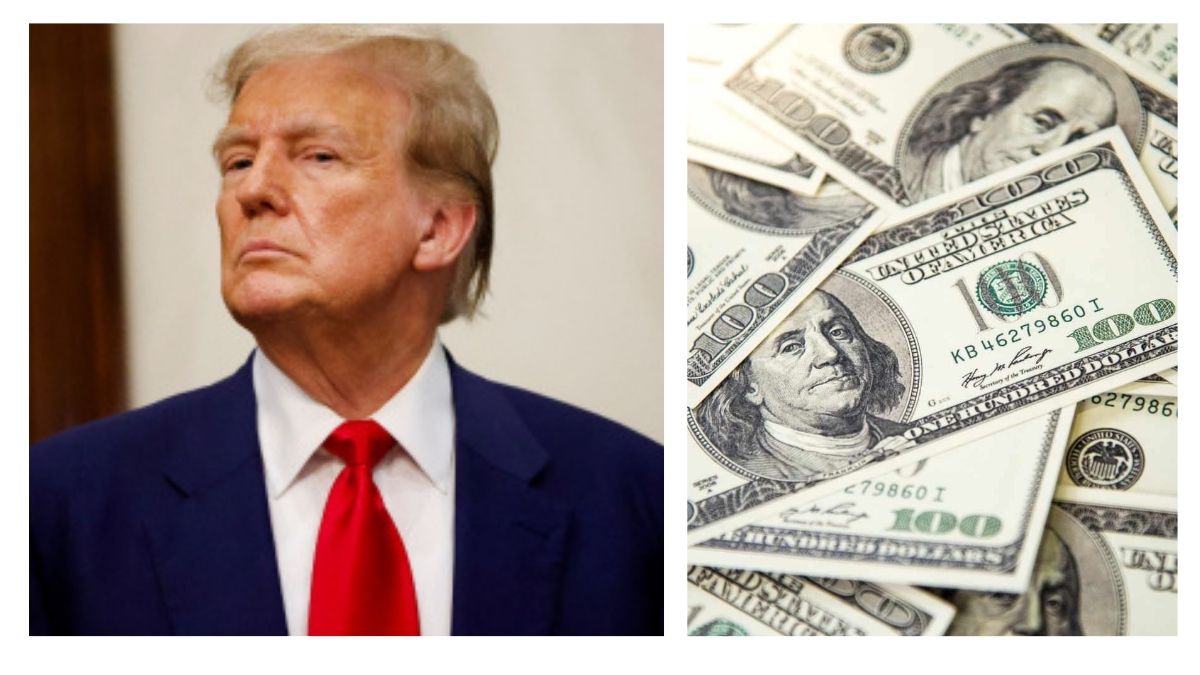
Data Reflecting Changing Reserve Behaviour
Despite record aggregate figures, disinvestment is observable in specific holders and reserve strategies:
1) Nordic and European institutional investors have publicly reduced holdings. Swedish pension fund Alecta sold most of its U.S. Treasury holdings over the last year, citing increased risk and unpredictability in U.S. macro-policy; Denmark’s AkademikerPension plans to exit its Treasury positions entirely.
2) India’s Reserve Bank has materially trimmed U.S. debt exposure. Data show India’s Treasury holdings fell to approximately $190 billion by October 2025, down around 21 % from about $241 billion a year earlier, marking a five-year low in absolute terms.
3) Concurrently, India markedly increased gold holdings crossing $100 billion in value by late 2025, consistent with global central-bank appetites for alternative safe assets.
These shifts reflect allocation adjustments rather than wholesale exit: India and others are adding gold and other assets to reduce concentration risk while maintaining diversified reserve buffers for trade, currency defence, and crisis liquidity.
Interpreting the “Sell America” Narrative
Some commentators frame disinvestment as strategic retaliation. For instance, the idea that Japan or Europe could “use Treasury holdings as a political card” against U.S. tariff policy. Japan’s finance ministry explicitly ruled out leveraging Treasury holdings in response to Trump tariffs in April 2025, emphasising that reserves are managed for exchange-rate intervention, not diplomacy.
Moreover, while “Sell America” rhetoric has traction, actual data complicate the narrative. Even after political shocks, foreign holdings of U.S. Treasuries rose overall to record levels in late 2025, driven largely by private capital flows, particularly into long-dated securities on Wall Street. Europe accounted for roughly €240 billion (~$281 billion) of this increase between April and November 2025, underlining that global demand for dollar assets remains deep, even amid political risk repricing.
This apparent contradiction, simultaneous record holdings and selective trimming, underscores a deeper market nuance: trend shifts in reserve behaviour are incremental and risk-driven, not sudden or uniform. Official reserve sales may be more evident in custodial data and institutional communications, but aggregate foreign demand can remain buoyant when private investors continue to buy.
Strategic Implications for India and Other Emerging Powers
For India, these developments matter in both economic and strategic dimensions:
1) Reserve Resilience and Defence Finance
Treasuries have traditionally underpinned a portion of India’s foreign exchange reserves, ensuring access to dollars for critical imports — including defence-related equipment and spares. A more volatile U.S. policy environment encourages India to diversify into assets like gold that are free of political access risk.
2) Cost of Capital and Fiscal Effects
Rising U.S. yields, partly reflecting a political risk premium, can influence global interest rate benchmarks, raising the relative cost of financing for countries dependent on external funding or whose sovereign spreads correlate with global yields. India’s own fixed-income markets, where yields are sensitive to both domestic demand and external reference rates, are influenced by such global dynamics.
3) Multipolar Trade and Finance Alignment
Reuters reports that “middle powers”, including Canada, the EU and India, are seeking trade frameworks and policy cooperation somewhat independent of the U.S. strategy mix, reflecting broader strategic repositioning in response to American tariff policies and geopolitical signalling.
Conclusion: A Recalibration, Not a Rupture
The emerging pattern is not a radical divestment from U.S. debt; it is a recalibration of how “safe” is defined. Foreign holders still view U.S. Treasuries as deep and liquid relative to alternatives, and overall holdings remain near historic highs. Yet, the price of that perceived safety now includes a political component reflected in yields that embed a risk premium, in reserve shifts toward gold and diversified assets, and in investor commentary.
In this recalibrated equilibrium, markets are signalling that even the world’s deepest sovereign bond market is not immune to geopolitical context. When bonds carry not just financial but political risk, reserve managers adjust behaviour incrementally, balancing liquidity, return, and geopolitical insulation. For policymakers, especially in emerging powers like India, the imperative is clear: build reserve strategies and financial architectures that are robust not only to economic cycles, but to policy volatility in an increasingly multipolar world.

 Inflect
Leave a comment