The debate over the University Grants Commission’s (UGC) Promotion of Equity in Higher Education Institutions Regulations, 2026 has become a proxy fight over a deeper question: whether Indian higher education will treat caste discrimination as a routine, structurally patterned governance problem that requires dedicated institutional architecture, or as an unfortunate but essentially individual issue best handled through generic, supposedly neutral mechanisms.
What Has Happened?
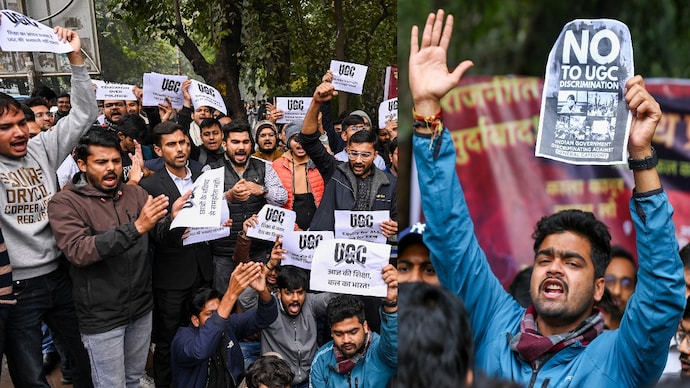
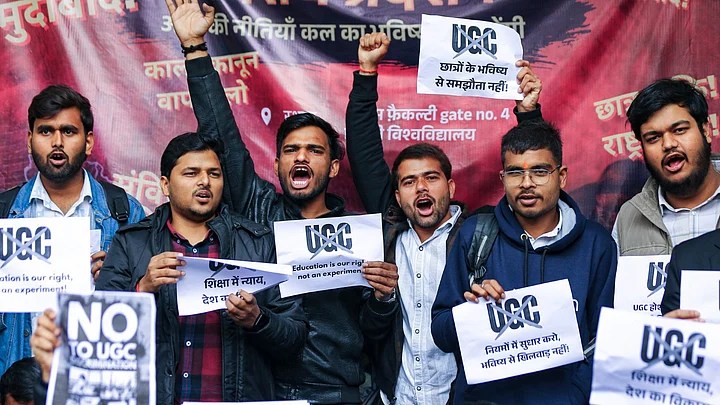
In January 2026, the UGC issued the Promotion of Equity in Higher Education Institutions Regulations, 2026, aimed at systematically addressing caste-based discrimination in universities and colleges. These regulations replace the 2012 framework, expand definitions of prohibited conduct, and require each institution to establish Equal Opportunity Centres, Equity Committees, and monitoring and reporting mechanisms. Non-compliance may attract regulatory consequences.As of January 29th, the Supreme Court kept in abeyance the 2026 regulations till March 19th calling the policy “too sweeping”. The top court has questioned whether this policy is regressive and pushes back against 75 years of efforts to build a casteless society. Critics, often speaking from a general-category standpoint, frame the regulations as vulnerable to reverse discrimination, administratively burdensome, and likely to polarise campuses by hardening identity lines.
Respectful Dissent: Why Recognition is Not Regression
The Supreme Court’s concerns deserve to be taken with the utmost seriousness. When the Chief Justice asks whether a policy risks being “regressive” or whether it may divide society after decades of striving toward a casteless ideal, the underlying constitutional instinct is clear: the law should unify, not harden social fault lines. The Court’s reminder that discrimination is not solely caste-based is also valid; campuses are sites of multiple intersecting prejudices—regional, linguistic, religious, gendered—and a governance framework must be sensitive to all. However, with respect, the inference that recognising caste discrimination institutionally amounts to moving away from a casteless society rests on a conceptual conflation: the difference between naming a hierarchy and perpetuating it.
A casteless society cannot be built by declining to see caste where it continues to structure lived experience. The constitutional project of the past seventy-five years has not been one of caste blindness; it has been one of caste awareness paired with anti-hierarchy, from reservations to the SC/ST (Prevention of Atrocities) Act to targeted educational schemes. These were not viewed as regressive because they acknowledged caste; they were understood as progressive precisely because they aimed to dismantle the material and institutional consequences of caste stratification. A regulation that requires universities to detect and address caste-based discrimination belongs analytically to this same lineage: it is an accountability mechanism, not an identity entitlement.
The concern that such regulations might divide society assumes that division originates in legal recognition. Yet evidence from higher-education institutions suggests that division more often emerges from unaddressed grievances, informal exclusion, and perceptions of institutional indifference. On that evidentiary baseline, the neutrality critique repeatedly collapses, less because it is ill-intentioned, and more because it misunderstands the asymmetry of the harm it claims to adjudicate.
The Quantified Problem and the Unquantified Burden
The most consequential empirical anchor is UGC’s own complaint data, which has entered the public domain through reporting on submissions to a parliamentary panel and the Supreme Court. Across five years, complaints of caste-based discrimination reported through Equal Opportunity Cells (EOCs) and SC/ST Cells rose from 173 in 2019–20 to 378 in 2023–24, an increase of 118.4%. Reports based on the same dataset state that between 2019–20 and 2023–24, the UGC received 1,160 complaints from 704 universities and 1,553 colleges; a high share, about 90.68%, was marked resolved, while pending cases rose from 18 to 108 over the same period. Critics sometimes seize on the absolute scale argument, hundreds of complaints across thousands of institutions is not much.
However, that reading is analytically shallow. Complaint counts are not prevalence estimates; they are visibility estimates produced by institutional incentives, reporting friction, fear of retaliation, and the credibility of grievance infrastructure. A system can have low complaint counts precisely because it is inhospitable to complainants. The more relevant inference is simpler: caste discrimination is reported often enough, and with rising pendency, to be a persistent governance issue rather than a rare aberration; and the enforcement apparatus in many institutions has not kept pace.
Under-reporting is not speculative. 87% of universities reported receiving zero caste-discrimination complaints; even where complaints were recorded, responses were sometimes described as informal lectures, counselling, mentorship, which may be appropriate in some disputes but is structurally ill-suited to adjudicating power-laden discrimination claims. More recent reporting shows that the very bodies created under earlier UGC norms, the Equal Opportunity Cells mandated in 2012, often function as skeletal, low-visibility entities: underfunded, staffed as an add-on duty, and lacking a robust grievance workflow.
A Times of India report on Delhi universities noted, for example, that Delhi University’s cell reported no caste-based complaints, while JNU’s cell recorded 28 complaints over five years (till May 2025): a contrast that strongly suggests variation in access, awareness, institutional trust, and reporting culture rather than a clean difference in lived realities. This matters because the neutrality critique often presupposes that existing, generic mechanisms are sufficient and that specialised structures introduce unfairness. The administrative record suggests the opposite: where the “neutral” architecture is thin, informal, or opaque, it predictably produces low reporting, discretionary handling, and conflict-of-interest risks, exactly the conditions in which a structurally disadvantaged complainant is least likely to be heard.
The asymmetry argument is not only about counts; it is about how caste discrimination operates in educational institutions. A key policy challenge is that many forms of caste bias are not theatrical slurs that leave easy evidence trails; they are often embedded in evaluative discretion, social exclusion, supervision dynamics, and peer networks, domains where power differentials are real and accountability is diffuse.
The AIIMS Thorat Committee record is instructive precisely because it documents the institutional mechanics of discrimination and the difficulty of proof. The committee report includes testimony-like accounts indicating that discrimination is “many a time … impossible to prove,” and explicitly notes that students perceived an absence of administrative authority equipped to handle such matters.
Secondary discussion of that report records a striking statistic: that 85% of students reported internal examiners wanted to know the caste of students and that grading was experienced as discriminatory, an example of how bias can sit inside the core of academic assessment while remaining plausibly deniable in any single case. Once you accept this governance reality, that discrimination is frequently informal, cumulative, and hard to evidence, then formal neutrality becomes a procedural trap: if you demand the evidentiary clarity typical of symmetric disputes, you effectively immunise the most common forms of structural discrimination.
These empirical and institutional facts reshape how one should evaluate the three major general-category critiques.
The Fallacy of Reverse Discrimination
Consider first the charge of reverse discrimination and misuse: the claim that broad definitions allow weaponisation against general-category students, faculty, or administrators. The strongest version of this critique is not that caste discrimination does not exist, but that badly drafted rules may chill legitimate academic discretion, produce reputational harm from unproven allegations, and invite opportunistic complaints. It is also true that courts and commentators have flagged vagueness as a live issue in the current controversy.
Yet as a policy objection, misuse risk is an argument for procedural safeguards, not for abandoning targeted protection. Every serious rights-protection framework—anti-ragging processes, sexual-harassment redressal, disability accommodations—has some misuse risk. Democracies do not respond by removing the right; they respond by designing due process: clear definitions of prohibited conduct, evidentiary standards proportionate to the harm, confidentiality rules that protect both complainant and respondent, timelines that prevent harassment-through-process, appeal routes, and sanctions for demonstrably malicious complaints. If critics want neutrality, neutrality lives here: in procedure, not in refusing to name caste.
What makes the reverse discrimination argument particularly weak in this context is that it implicitly asserts a symmetry that does not exist. Caste-based discrimination is, by definition, tied to a social hierarchy that historically allocates status, networks, and presumption of merit asymmetrically. General-category individuals can be treated unfairly; they can be harassed; they can be falsely accused. But those wrongs are not the same category of harm as caste discrimination as a structural phenomenon. Treating them as equivalent, by insisting that any caste-specific protection is biased, collapses the distinction between generic conflict and historically patterned exclusion. A policy regime can (and should) protect everyone through general disciplinary and harassment mechanisms, while also recognising that caste discrimination requires specialised competence, monitoring, and accountability precisely because it is often minimised, misclassified, or dismissed as personal misunderstanding.
The Cost of Compliance vs. the Cost of Inaction
The second critique, administrative burden, also requires a proportional reading. It is true that setting up Equity Committees, monitoring systems, and reporting workflows has costs, and that Indian higher education contains institutions with sharply uneven administrative capacity. But this critique often commits a classic governance fallacy: it counts the visible costs of compliance while ignoring the hidden costs of inaction. Underperforming equity infrastructure produces real downstream burdens—legal risk, reputational harm, student attrition, mental health crises, and persistent distrust in institutional processes—costs which are frequently externalised onto marginalised students and their families rather than booked on administrative ledgers. Reporting on EOCs functioning as “token bodies” underscores that the previous equilibrium was not “low burden, high justice,” but “low burden, low capacity.” The practical answer is not to reject equity governance; it is to design implementation intelligently, templates, training, minimum staffing norms, simple case-tracking systems, periodic audits, and realistic resourcing. The burden critique becomes persuasive only if paired with a credible alternative mechanism that demonstrably works; the present record suggests existing mechanisms frequently do not.
The Myth of a Neutral Campus
The third critique: implementation will not be neutral and will polarise campuses sounds cautious but often rests on an implausible premise: that campuses are presently neutral and that naming caste introduces identity conflict. The complaint and under-reporting data, and the institutional accounts from elite settings like AIIMS, indicate that caste is not introduced by equity rules; it is already operating through social dynamics, evaluation systems, and informal power. In this context, polarisation is often not produced by accountability; it is produced by the combination of harm and denial, by students experiencing discrimination while institutions prefer to treat incidents as noise, misunderstanding, or reputational risk. A well-designed grievance system can reduce polarisation by replacing rumour, factional escalation, and informal retaliation with predictable procedures and institutional clarity. The relevant question is not whether equity rules can be politicised, they can, but whether the absence of credible, specialist mechanisms has already politicised the terrain by leaving marginalised students to fight for recognition case by case, often against more powerful actors.
A formal, balanced position should therefore separate ends from means. The ends, protecting dignity, equal opportunity, and safety, are non-negotiable for any higher-education system claiming meritocracy. The means, how to do this without vagueness, without chilling legitimate academic authority, and without creating perverse incentives, are the domain of careful institutional design. The evidence suggests that caste discrimination is sufficiently frequent to warrant dedicated governance capacity, sufficiently under-reported to make low complaint counts a weak reassurance, and sufficiently hard to prove through ordinary mechanisms that neutrality in the thin procedural sense becomes a recipe for impunity.
If general-category critics are serious about fairness, the most coherent stance is not opposition to caste-equity architecture per se, but insistence on strong safeguards: precise definitions, proportional evidentiary standards, independent oversight, transparent reporting (with privacy protections), and enforceable penalties for malicious complaints. Conversely, if neutrality is used to argue that caste-specific mechanisms should not exist at all, then neutrality ceases to be a principle and becomes an instrument: a way to preserve a system where the burden of proof falls most heavily on those least able to carry it, and where structural harm survives by remaining administratively illegible.
Understanding Equality
The Supreme Court is correct that discrimination on campuses can take many forms, including cultural and regional prejudice. Students from the Northeast, the South, or minority linguistic backgrounds may indeed face stereotyping or ridicule. However, this observation does not weaken the case for caste-specific mechanisms; it strengthens the argument for a broader anti-discrimination framework with specialised competence for different axes of harm.
Caste discrimination is distinct not because other forms of prejudice are trivial, but because caste remains a historically entrenched social hierarchy with documented consequences for dignity, access, and academic experience. General anti-ragging or cultural-sensitivity frameworks do not reliably capture how caste operates through evaluation bias, peer ostracism, or informal gatekeeping, areas where the line between academic discretion and discrimination is especially difficult to adjudicate without specialised understanding.
Ultimately, the dispute is not between equality and special treatment. It is between two conceptions of equality: one that treats equality as identical formal rules irrespective of starting conditions, and another that treats equality as equal protection in practice, which sometimes requires institutionally specific remedies for patterned harm. In a system where the harm is asymmetric and often deniable, insisting on caste-blind neutrality is not the high ground. It is, too often, a refusal to govern.
Performative Castelessness Cannot Be a Solution
The aspiration for a casteless society is a constitutional ideal; the persistence of caste as a social reality is an empirical fact. Policy must be anchored in both. To treat caste as administratively irrelevant because it is normatively undesirable risks creating what might be called performative castelessness, a posture of neutrality that leaves structural disadvantage untouched. Recognition in law does not freeze identity; it creates the conditions under which identity-based harm can be challenged and, ultimately, rendered less salient. In this sense, targeted equity mechanisms are transitional tools: they acknowledge difference in order to reduce the power of difference.
Respectfully, then, the key question is not whether recognising caste discrimination contradicts the casteless ideal, but whether ignoring institutional manifestations of caste brings that ideal closer. The historical record of Indian social policy suggests the opposite. Progress toward equality has come not from silence, but from measured, accountable interventions that translate constitutional promises into institutional practice.
If the 2026 framework is vague, it should be clarified; if safeguards are weak, they should be strengthened. But the underlying premise, that caste discrimination warrants explicit institutional attention, does not move society backward.
It reflects the unfinished work of moving forward.

 Inflect
Leave a comment