Carbon Markets essentially put a price on emissions. Countries can develop Carbon Credit Trading Systems that allow carbon credits to be bought and sold by emitters, depending on actual and expected emissions levels. Countries may also set caps on allowed emissions per industry to meet climate targets, with permits required to exceed the cap, using varying levels of enforcement and compliance strategies.
Introduction
The India-European Union Free-Trade Agreement (FTA) was concluded at the time the EU’s Carbon Border Adjustment Mechanism (CBAM) moved from its reporting to its payment phase. The FTA secures preferential access for 99% of Indian exports to the EU, as well as technical and financial support for India’s energy-intensive export-led industries, particularly steel and aluminium. However, it provides no relaxation on CBAM requirements.
As the third-largest carbon emitter and the fourth-largest economy globally, India faces the dual burden of balancing decarbonisation with economic growth. Even before the FTA, the EU was, and continues to be, India’s largest trade partner. India’s work-in-progress carbon market will, hence, result in export-led industries bearing the brunt of the EU’s stringent restrictions and fines calculated under its Emission Trading System (ETS).
India’s credit-based carbon market covers thirteen sectors over two schemes, the Carbon Credit Trading Scheme (CCTS) and the Perform, Achieve, and Trade (PAT) Scheme. These are Aluminum, Cement, Chlor-alkali, Fertiliser, Iron and Steel, Pulp and Paper, Textiles, Thermal Power Plants, Railways, Commercial Buildings, Petroleum Refineries, Petrochemicals, and Distribution Companies.
Of these, Iron and Steel. Organic Chemicals, and Mineral fuels, oils, and distillation products appear in India’s largest export category by volume, adding up to a financial value of Rs. 13,200 crores. The price paid to trade under the CBAM, around €90 per tonne of carbon dioxide emitted, reduces the benefits of the lower or no tariffs guaranteed under the FTA. The Iron and Steel industry alone is estimated to have to pay around Rs. 3000 crore in CBAM charges.
Carbon Markets have now become not only a tool for conscious decarbonisation but also a license to trade globally. The transition from climate intent to regulation and industrial enforcement will determine the fate of India’s export-led industry.

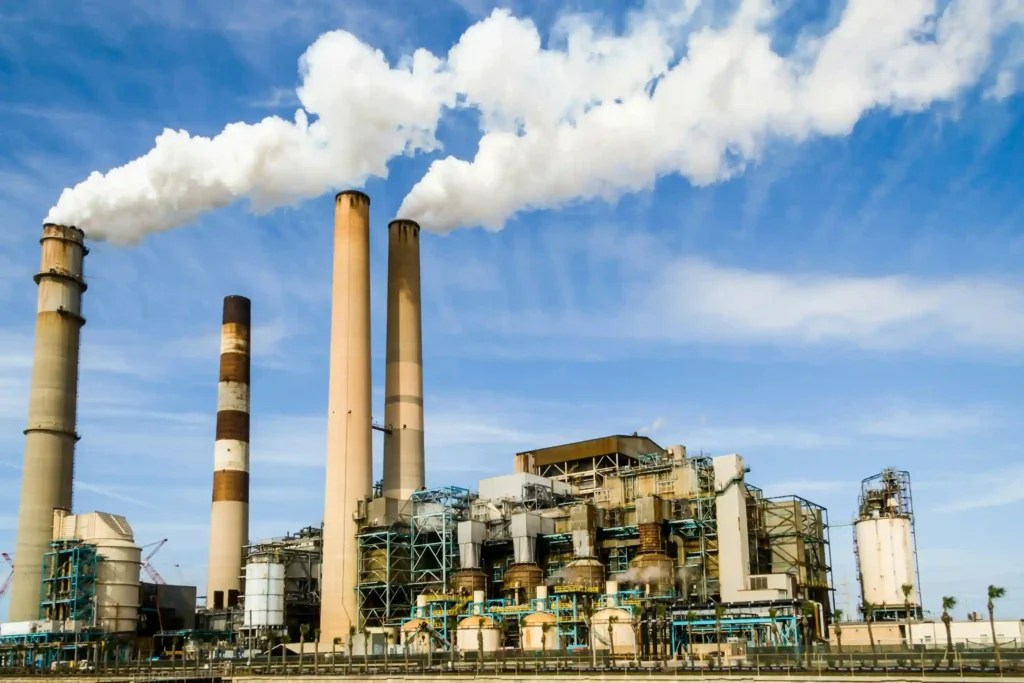
Image Source: IFLR
Is India Starting from Scratch?
The Perform, Achieve, and Trade (PAT) Scheme in India was introduced in 2012, mandating energy-efficiency improvements for large, energy-intensive industries over three years, allowing them to trade excess savings as energy certificates. In 2021, India made international commitments at the Conference of Parties (COP) 26 to reach Net Zero emissions by 2070 and, to do so, was developing capacity for renewable energy generation and storage. A key negotiation by India at the time was replacing the term “phasing down” with “phasing out” for coal use in the Glasgow Climate Pact, to which India is a party. This prioritised India’s energy security and development needs, allowing a slower, phased reduction in coal use rather than an abrupt, immediate end to its use. By 2023, India had made significant progress towards these goals and had also passed a key legislation, the Energy Conservation Amendment Act (ECAA).
The ECAA introduced the Carbon Credit Trading Scheme (CCTS), the obligation to use Non-Fossil Sources of Energy, the Energy Conservation Code for Buildings, standards for vehicles and vessels, and the composition of the governing council of the Bureau of Energy Efficiency (BEE). The CCTS, unlike the PAT Scheme, operates through a dual mechanism. First, a mandatory compliance mechanism for Obligated Entities to meet reduced GHG Emission targets. Second, a voluntary Offset Mechanism is undertaken via project registration. As of April 2025, the CCTS replaced the PAT Scheme for nine of the thirteen sectors identified as energy-intensive, to reduce their energy consumption and allow them to trade excess savings as Carbon Credit Certificates.
The Contrast, The Gap
When contrasted with EU’s ETS, India’s existing carbon trading mechanism is nascent.
Under the CBAM, Indian companies can reduce their EU carbon levy if they can prove they’ve already paid an equivalent carbon price domestically. However, this requires three conditions to be met: comparable measurement systems for emissions, pricing levels, and mutual recognition between the EU and Indian frameworks.
The CCTS falls short on all three counts. First, while the EU ETS currently prices carbon at approximately €90 per tonne, India’s carbon credit prices under the PAT scheme have traded at around ₹1,000 per certificate, equivalent to just €10 per tonne. Even when the CCTS becomes operational, initial pricing is unlikely to match EU levels, meaning Indian exporters will still face substantial CBAM payments.
Second, the methodological gap is significant. The EU’s CBAM requires facility-level emissions data, calculated using standardised methods for embedded emissions. India’s PAT scheme measures energy intensity reduction, not absolute carbon emissions, a fundamentally different metric. The CCTS will need to develop emission factors, measurement protocols, and verification standards that align with EU requirements, work that is still in progress.
Third, the timeline mismatch creates immediate vulnerability. CBAM payment obligations begin in 2026, the same year India’s CCTS is scheduled to be operationalised. Even if the CCTS launches on schedule, industries transitioning from PAT will face a learning curve in emissions accounting, verification, and trading. Meanwhile, among the four sectors remaining under PAT, distribution companies are now under pressure to supply greener, lower-carbon power to heavy industries to avoid CBAM levies.
Regulation and Enforcement: In the Air?
While the intent and design of the framework show promise, India’s regulatory architecture for its carbon market is limited to the National Steering Committee for the Indian Carbon Market (NSCICM). This functions more as a body for policy oversight rather than for regulation and enforcement.
Table 1: Members of the NSCICM
| Ministry of PowerMinistry of Environment, Forest and Climate Change | Ministries |
| Grid Controller of India Limited | Registry |
| Bureau of Energy Efficiency (BEE) | Administrator (CCTS) |
| Central Electricity Regulatory Commission (CERC) | Regulator for Trading Activities |
Source: Bureau of Energy Efficiency
In the context of the CBAM, the current framework falls short on two counts. First, India lacks a dedicated climate regulator with enforcement powers. The BEE’s governing council composition prioritises energy sector representation but may lack the trade, customs, and international negotiations expertise required to navigate CBAM compliance. While the Energy Conservation Amendment Act grants the BEE the power to penalise non-compliance, the details of enforcement remain unclear. What happens if an Obligated Entity fails to meet its emissions target? Can penalties be appealed? More importantly for CBAM purposes, will there be penalties for misreporting emissions data that could affect EU compliance? The regulatory vacuum creates uncertainty for industry.
Second, Measurement, Reporting, and Verification (MRV) systems are the backbone of credible carbon markets. India currently lacks accredited third-party verifiers trained in CBAM-compatible methodologies, a centralised emissions database, or standardised reporting platforms. As large firms decarbonise to stay competitive, their downstream suppliers, MSMEs, will face pressure to comply or risk losing access to markets. MSMEs contributed 45.79% of exports in 2024, and without the right MRV tools, they risk being cut out of global supply chains, leading to non-compliance with CBAM requirements and potentially negative verification outcomes, including higher costs, contractual liabilities, and even reputational damage.
Way Forward
India’s climate policy architecture is evolving, but enforcement and measurement capacity will determine whether exporters gain relief or face additional cost pressures under CBAM. Regulation of carbon markets in India could benefit from a compliance division as an independent regulator that serves three purposes. One, to ensure measurement standardisation not only with the EU but also with other emission trading systems worldwide. Two, to liaison and negotiate with various systems around the world on technical and procedural issues to ensure Indian exporters do not face unprecedented losses. Three, to ensure domestic compliance with these standards.
This regulator could be the NSCICM, reconstituted as a statutory body parallel to the BEE under the Energy Conservation Amendment Act, with additional members with technical expertise. Operating as India’s designated point of contact for carbon emission compliance and trading, this body must develop an MRV system that establishes an India-specific, standardised reporting platform comparable to global emission trading systems. This will improve the ease of doing business for Indian industry players and enable the easy estimation of carbon-reduction requirements or overhead costs. The regulator must also have enforcement authority. The enforcement framework must include clear penalties for non-compliance, while providing technical assistance to smaller exporters who lack in-house capacity, to ensure that regulatory stringency does not concentrate market access among large firms.
India’s challenge is not only to establish carbon pricing, but also to create institutional depth. There is a need to bridge the gap between intent and enforcement. The fate of India’s export-led growth rests on whether its carbon market can move from a “tick-box” mechanism to a globally recognised and trusted prerequisite of trade.

 Inflect
Leave a comment