Anaemia in India continues to persist despite more than five decades of targeted public health interventions. Its persistence reflects not a lack of effort, but structural weaknesses in programme design, fragmented implementation architecture, data limitations, and the social determinants that shape nutritional outcomes.
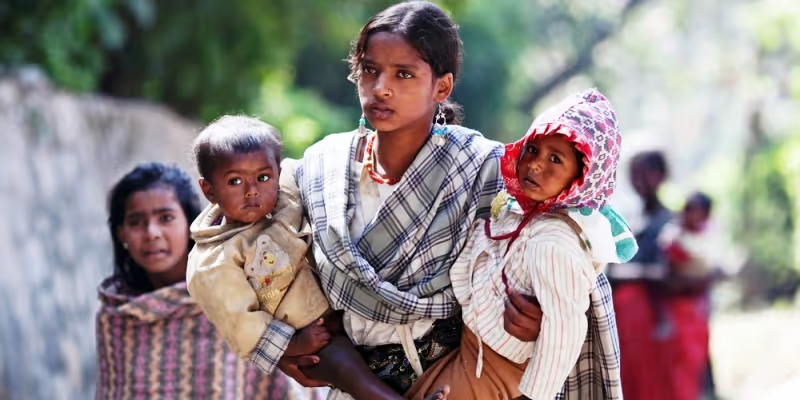
Image Source: YourStory
India today is the world’s fifth-largest economy, though its per-capita income still reflects deep developmental inequalities. This contrast between economic scale and persistent deprivation is visible in one of the country’s most stubborn public health challenges: anaemia. Anaemia is a serious global public health problem that particularly affects young children and women of all ages. Over 1.92 billion people worldwide suffer from anaemia. Low and middle-income nations bearing the brunt of this burden. In India, 57% of women aged 15 to 49 and 67.1% of children under five are anaemic (NFHS-5).
What is Anaemia?
Anaemia is a condition in which the number of red blood cells or the haemoglobin concentration within them is lower than normal. Haemoglobin is needed to carry oxygen and if you have too few or abnormal red blood cells, or not enough haemoglobin, there will be a decreased capacity of the blood to carry oxygen to the body’s tissues. Iron deficiency anaemia, amongst all, is the most prevalent. India holds the dubious distinction of carrying the largest burden of anaemia globally.
Misaligned Incentives: The Beginnings of a Failure
India’s battle against anaemia is decades old. The National Anaemia Prophylaxis Programme (NAPP) was launched in 1970 to distribute iron and folic acid (IFA) tablets to pregnant women and children. Over time, the effort expanded through the Reproductive and Child Health Programme, the Weekly Iron and Folic Acid Supplementation (WIFS) scheme for adolescents in 2012, and most recently Anaemia Mukt Bharat (AMB) in 2018. AMB targets six groups: young children, school-age children, adolescents, pregnant women, lactating mothers, and women of reproductive age. The goal was to reduce anaemia by three percentage points each year.
Yet progress has been limited. Between NFHS-4 (2015–16) and NFHS-5 (2019–21), anaemia among women of reproductive age increased from 53% to 57%, while among children under five it rose from 58.5% to 67%. Rather than declining, the burden has continued to grow.
Fifty-five years. Hundreds of millions of tablets. Billions of rupees. And the needle moved backwards.
Why?
On ground, IFA tablets in India, travel through one of the most elaborate last-mile delivery systems in the world, and one of the most underappreciated points of failure.
IFA tablets move through a long delivery chain, from state warehouses to district stores, then to Primary Health Centres, Sub-Centres, and finally into villages.
At the last mile, distribution is split across multiple frontline workers. ASHA workers distribute tablets during home visits. Auxiliary Nurse Midwives (ANMs) provide them to pregnant and lactating women during antenatal check-ups and Village Health and Nutrition Days. Anganwadi Workers distribute them to young children and out-of-school adolescent girls through Anganwadi centres. For school-going adolescents, teachers administer tablets every Monday under the WIFS programme.
Each of these actors reports to a different department (health, women and child development, or education) and operates under separate supervision and incentives. Responsibility for distribution is fragmented, and no single actor is accountable for whether the intervention actually reduces anaemia.
From a bureaucratic standpoint, tablet distribution is a near-perfect intervention. It produces countable outputs: tablets procured, tablets distributed, beneficiaries reached. These numbers travel up the administrative chains, satisfy annual reporting requirements, and demonstrate programme activity to funding bodies. Under the National Health Mission’s state performance framework, success is measured by tablets procured, beneficiaries registered, and visits recorded. There is no corresponding mechanism to measure what happens afterward. Whether haemoglobin levels rose, fell, or stayed unchanged is simply not captured in the reporting architecture. In a governance system that rewards what can be measured and reported upward, the IFA tablet wins every time, not because it works best, but because it is counted most easily. This is the political economy of India’s anaemia failure. It is a structural incentive, and it will not change until the measurement frameworks that drive programme design are themselves redesigned to reward intersectoral outcomes rather than vertical outputs.
The answer to why anaemia persists despite decades of programmes starts from failures on the ground but connects to something deeper: a fundamental misdiagnosis of what is actually being treated.
Reason 1: The Foundational Error: Treating a Syndrome as a Single Disease
The single biggest structural flaw embedded in India’s anaemia strategy is that it treats anaemia as though it were synonymous with iron deficiency – it is not. Anaemia is a clinical sign, a haemoglobin concentration below a defined threshold. It has dozens of causes: iron deficiency, certainly, but also vitamin B12 deficiency, folate deficiency, vitamin A deficiency, chronic infections, inherited blood disorders, inflammation, and blood loss from parasitic infections. The WHO itself estimates that iron deficiency accounts for anaemia in only about 42% of children under five and 49-50% of women globally: the rest have other causes, or a combination of several.
India, however, has built its entire programmatic architecture around iron-folic acid supplementation. WHO estimates suggest that, at best, iron supplementation can address roughly half the problem – a programme that is 90% focused on IFA tablets is structurally incapable of solving the full crisis, even if compliance were perfect. We have been giving iron tablets to people who may not have iron deficiency. Hence, this brings us to the next layer of the problem.
Reason 2: Even When Iron Is the Problem, the Tablets Don’t Work the Way We Think
Assume that a woman does have iron-deficiency anaemia. She receives her IFA tablet. Does it work? Not as reliably as policy assumes, because the tablet has to survive a hostile biological environment before it can help her.
1) The Phytates Problem
India’s dietary backbone, which includes wheat, rice, lentils, and bajra, is loaded with phytates: naturally occurring compounds that chemically bind to non-heme iron in the gut and render it unabsorbable. In India, staple foods provide almost 70% of the daily iron intake and that as staple foods are a rich source of phytate, this ingested iron is poorly absorbed. Now, since India is a predominantly plant-based food nation, giving someone more non-heme iron without changing the dietary matrix it enters, is like filling a leaking bucket.
2) The Hepcidin Problem
When the body is fighting infection or living in a state of chronic low-grade inflammation, both common in communities with poor sanitation and contaminated water – the liver releases a hormone called hepcidin. Hepcidin’s job is to block iron absorption from the gut and lock iron away in cells. It evolved as a defence mechanism against bacteria that feed on iron. However, in the context of chronic infection, it makes iron supplementation largely futile: a body under siege from parasites, recurrent infections, or systemic inflammation cannot absorb supplementary iron efficiently. Hence, the tablet is not the problem, the ecosystem the tablet enters is.
Reason 3: The Data Itself May Be Broken
The NFHS surveys, treated as the gold standard for measuring anaemia prevalence in India, use capillary blood samples drawn from a finger-prick and measured with a portable device. The problem is that multiple studies have shown that capillary sampling can overestimate haemoglobin by as much as a gram per decilitre compared to venous blood samples tested in standardised laboratory settings. A gram per decilitre is a significant margin. At the population level, even modest systematic overestimation or underestimation can produce misleading trend data and misleading trend data generates misleading policy.
The WHO issued new guidelines in 2024 recommending that automated haematology analysers and venous blood samples be used for population-level anaemia estimation. The NFHS-6, originally scheduled to begin in 2023-24, dropped anaemia measurement entirely from its survey because experts flagged the methodological flaws. This is an extraordinary public admission that decades of national data may be unreliable. India is currently experimenting with the Diet and Biomarker Study in India (DABS-I), which uses venous sampling, but no nationally representative results have been published yet. When you don’t know your true baseline, you cannot measure your progress. When you can’t measure progress, you can’t course-correct. India has been flying, in large part, blind.
Reason 4: The Worm-Sanitation-Anaemia Loop Nobody is Breaking
The most vicious cycle at the heart of India’s anaemia problem is that no amount of tablet distribution can interrupt on its own. It is the relationship between intestinal parasites, open defecation, and chronic blood loss. Soil-transmitted helminths, including hookworm and roundworm, colonise the gut and cause chronic blood loss. Hookworms, in particular, latch onto the intestinal wall and feed directly on blood. In Tamil Nadu, 84.8% of schoolgirls with intestinal parasitic infections were anaemic. These parasites thrive in environments with open defecation and poor sanitation.
Now since this is prevalent across many states, India runs a National Deworming Day to address this. However, a study found that deworming only reduces anaemia effectively in communities where open defecation is absent or minimal. In communities where more than 30% of the population practises open defecation, deworming’s effectiveness collapses because children are reinfected within weeks of being treated.
The Swachh Bharat Mission built millions of toilets. However, building toilets and changing sanitation behaviour are different things. Behaviour change is slow, cultural, and requires sustained social investment. Meanwhile, deworming and tablet distribution continue into environments structurally designed to recreate the infection burden. Sanitation is not supplementary to anaemia reduction, it is a prerequisite.
Reason 5: The Ignored Genetic Burden
There is another vast and under acknowledged contributor to India’s anaemia burden: hereditary blood disorders. Approximately 3.3% of India’s population carries the gene for beta-thalassemia, and the country has the largest number of children with Thalassemia major in the world. Sickle cell disease, particularly prevalent among tribal communities in Gujarat, Maharashtra, and central India, affects millions more. Now, giving iron to a person with thalassemia traits does not help them, it may actually cause iron overload over time which carries its own serious toxicity. Hence, for people with sickle cell disease, the anaemia is caused by accelerated red blood cell destruction, making iron tablets completely irrelevant.
India has no universal screening programme for haemoglobinopathies. Tribal women in Karnataka, Adivasi communities in Odisha and Jharkhand, populations in Gujarat: many of them, with high sickle cell and thalassemia prevalence, receive the same IFA tablet as urban middle-class adolescents, with no differentiation and no diagnostic basis.
Reason 6: Anaemia is Also a Social Condition
Beyond biology and policy, there is a dimension of this crisis that cannot be addressed by any tablet or screening programme: the social architecture that makes women and girls structurally vulnerable to anaemia in the first place. Anaemia is a social condition.
Anaemia is closely associated with poverty and low dietary diversity. In India’s food system, the poorest households rely heavily on subsidised staples primarily rice and wheat while consumption of iron-rich foods such as pulses, green vegetables remains low. Government estimates suggest that three out of four Indian women do not meet their daily dietary iron requirements, reflecting the structural nutritional imbalance in household diets at the bottom of the income distribution. Early marriage and adolescent pregnancy compound this deprivation sharply. A pregnant 16-year-old is simultaneously supporting two bodies with nutritional reserves that were never adequate to begin with, facing dramatically increased iron demand at the worst possible time. According to a report on Ending Child Marriage (UNICEF, 2023), India is home to the largest number of child brides. Nearly one in four young women were married before the age of 18, the highest number in the world, ensuring a consistent pipeline of the most nutritionally vulnerable pregnancies.
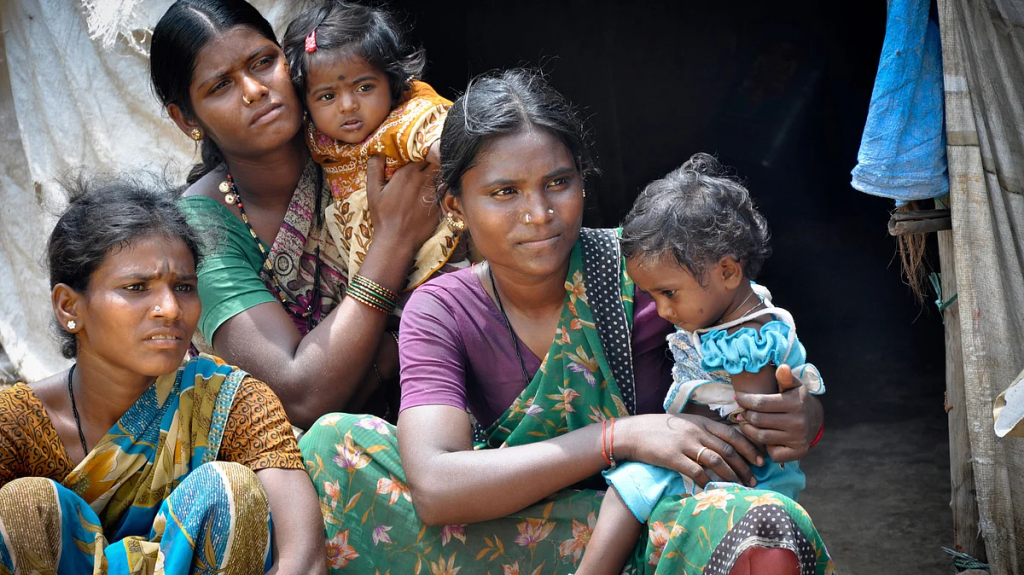
Image Source: The Quint
The gender dimension of anaemia begins at the household level. In many households, women and girls traditionally eat last and consume smaller portions of protein or iron-rich foods. Combined with biological iron losses through menstruation, this dietary hierarchy produces chronic micronutrient deficits that intensify during adolescence and pregnancy when iron requirements rise most sharply.
A study by Singh et al. found that maternal education was one of the key drivers of change in childhood anaemia prevalence in India, alongside maternal anaemia status and household wealth. An educated woman is more likely to seek antenatal care, challenge food distribution practices within her household, and recognise nutritional deficiency in her children. Education does not just correlate with better haemoglobin outcomes. It operates through each of these pathways simultaneously.
Last but not the least, caste-based inequalities have a significant impact on anaemia prevalence. A study by Vart et al. found that Scheduled Tribe women had an overall anaemia prevalence of 77%, and that the gap between ST and general category women persisted even after adjusting for education and household wealth simultaneously, confirming that the disadvantage is structural rather than purely economic. Scheduled Castes and Scheduled Tribes women have systematically higher anaemia rates, reflecting their structural exclusion from nutritious food, healthcare, and economic opportunity. These are not problems that distribution programmes can solve. They require structural equity.
What Success Looks Like
Progress on anaemia is not impossible. There are countries that have achieved it by making the right choices, and two of them – the Philippines and Guatemala offer the clearest evidence of what an effective strategy looks like.
An analysis published in The Lancet Global Health found that of all countries tracked, only Guatemala and the Philippines were on track to halve anaemia prevalence among women by 2030. Both arrived at that trajectory through the same fundamental formula: integration across sectors, investment in women outside the clinic, and diagnostic honesty about what was actually driving anaemia in their specific population. That last element, diagnostic honesty, is the most transferable lesson and the one most frequently skipped.
Case Study – The Philippines
Between 2008 and 2018, the Philippines reduced anaemia prevalence among women of reproductive age from 27% to 12% – a reduction of fifteen percentage points in a decade. To put that in perspective, the global average annual rate of reduction during the same period was approximately 0.4 percentage points per year. The Philippines was reducing at roughly six times that pace.
The success is often attributed to its supplementation programme but the data tells a different story. Non-health sector interventions accounted for 62% of the measurable change with conditional cash transfers through the Pantawid Pamilyang Pilipino Program (4Ps), investments in women’s education, and free distribution of sanitation infrastructure accounting for a major contribution. Direct healthcare access and supplementation accounted for 44%. In other words, more than half the work was done by a welfare ministry and an education ministry, not a health ministry. The iron tablet was part of the strategy. It was not the strategy.
What made this possible was a structural governance choice that India has never made. The Philippine Plan of Action for Nutrition is coordinated by the National Nutrition Council, a body composed of representatives from multiple government agencies, mandated to oversee food production, food assistance, health protection, and nutrition education simultaneously. Nutrition was treated as a cross-government responsibility from the outset, not a health department problem. Each intervention was matched to a specific identified cause: the 4Ps cash transfers addressed poverty-driven food insecurity, sanitation investment addressed hookworm burden, and women’s education addressed the long-term behavioural and agency deficits that no supplement can replace.
Case Study – Guatemala
Guatemala’s trajectory is less discussed in the global nutrition literature but is in some ways more analytically useful for India because the starting conditions were similar. Guatemala reduced anaemia prevalence among women of reproductive age from approximately 21% in 2002 to under 12% by 2015, tracking closely with the Philippines’ rate of improvement.
The Guatemalan diagnosis was different from the Philippines in a critical respect: its anaemia burden was far more heavily driven by chronic undernutrition and dietary poverty than by iron supplementation failure. Therefore, its interventions centred heavily on fortification of sugar with vitamin A and iron. It was strengthened and monitored from the late 1990s onward alongside mandatory wheat flour fortification with iron and folic acid in place from 1993.
The choice of sugar as a fortification vehicle is analytically significant. Sugar is consumed at near-universal rates in Guatemala regardless of income level, geography, or dietary pattern. Fortification through it reaches the rural poor, the urban poor, and subsistence communities simultaneously, without requiring compliance, behaviour change, or a functioning last-mile delivery system. The Guatemala case is often cited as one of the strongest natural experiments in the global literature on food fortification precisely because the fortification policy preceded the anaemia reduction by enough years to establish a causal claim.
What Can Be Imported to India and What Cannot
The single most transferable lesson from both countries is diagnostic precision. Both the Philippines and Guatemala invested in understanding what was actually causing anaemia in their specific populations before designing their response. India has the NFHS, which provides state-level prevalence data, but it does not disaggregate anaemia by cause. It measures the symptom without identifying the mechanism. Anaemia Mukt Bharat has acknowledged this in its design by including B12 and folate alongside iron, but the diagnostic infrastructure to know which populations need which intervention most has never been built.
The conditionality architecture of the cash transfer programmes is structurally transferable. India already has the world’s largest conditional cash transfer infrastructure through the Pradhan Mantri Jan Dhan Yojana, DBT, and MGNREGS systems. Linking anaemia-related behaviours to existing cash transfer conditionalities is already architecturally built strongly. The question is whether the political will exists to use it for nutritional outcomes rather than treating it purely as a poverty transfer mechanism.
The community health worker model which worked in Guatemala is the element most directly analogous to India’s ASHA (Accredited Social Health Activist) programme. There are approximately 10.4 lakh ASHAs in India, making it the largest community health worker programme in the world. They are mandated to deliver iron-folic acid supplements, conduct home visits, and support antenatal care but on the ground ASHA programme faces documented constraints: irregular supply chains, delayed compensation, and training quality varies enormously by state. Therefore, the architecture exists; the execution is incomplete.
What cannot be imported is perhaps more important to be acknowledged.
The Philippines’ decentralised local government structure does not have a close analogue in India’s administrative architecture. India’s nutrition programmes are primarily centrally designed and state-administered, with district and block-level implementation but limited autonomy to adapt programme design to local conditions. Hence, this is a structural constraint that cannot be wished away.
The dietary composition difference is also fundamental. Filipino and Guatemalan interventions could lean on animal-source food promotion in ways that face real cultural and religious barriers in India’s highest anaemia burden states, particularly Gujarat and Rajasthan where vegetarianism is high. Dietary diversity promotion in India has to work within constraints that do not exist abroad. However, this is not insurmountable – pulses, green leafy vegetables, and locally available iron-rich foods can be promoted effectively but it requires a programme design that takes the actual dietary culture of the target population as its starting point rather than treating increased animal-source food consumption as the default recommendation.
What Needs to Be Changed in India: A Strategy Intervention
The research, taken together, points toward a strategy radically different from the current approach.
1) Cause-specific diagnosis must precede intervention.
The constraint here is not fiscal but institutional. The Ministry of Health’s performance framework for sub-centres measures tablets distributed and antenatal visits completed, not diagnostic accuracy or treatment appropriateness. Distribution 100 of IFA tablets gets a box ticked. Until the performance metrics that govern frontline health workers are redesigned to reward cause-specific treatment rather than volume of distribution, diagnostic tools will remain pilots and the IFA tablet will remain the default solution. What is needed is to roll out affordable, scalable testing at primary healthcare level that can distinguish iron-deficiency anaemia from haemoglobinopathy-related anaemia, B12 deficiency, and chronic disease anaemia.
2) Sanitation before deworming, not alongside it.
The evidence is clear: deworming only works where open defecation has been substantially eliminated. Ironically, The Ministry of Jal Shakti looks after open defecation elimination whereas The Ministry of Health is responsible for deworming. Neither ministry’s annual targets include even a reference to the other’s outcomes. Deworming Day coverage is reported to the Health ministry as a success metric regardless of whether the targeted communities even have functional sanitation. The binding constraint here is a joint accountability mechanism that does not exist. What would fix it is a single convergence indicator, reported to both ministries simultaneously, that measures deworming impact only in communities that have crossed a defined open defecation threshold. Thus it is important to sequence the interventions accordingly, and measure deworming coverage alongside WASH (Water, Sanitation, Hygiene) indicators in the same communities. Their coverage must be measured together, not in separate departmental silos.
3) A unified food and nutrition security policy.
India does not lack nutrition programmes. It lacks a governance architecture that makes them work together. Health, Women and Child Development, Jal Shakti, Education, and Agriculture each run interventions that touch anaemia outcomes, and each reports upward through separate ministry chains with separate targets. The solution is a food and nutrition security policy that establishes convergence not as a coordination aspiration but as a binding performance obligation, where joint haemoglobin outcomes are reported by all five ministries simultaneously and each is held accountable for the part of the problem it owns. India’s National Nutrition Policy of 1993 called for exactly this intersectoral architecture via POSHAN Abhiyaan but where it needs improvement is to build a single accountability mechanism that binds them to a shared nutritional outcome.
4) Fix the data.
The NFHS-6 dropped anaemia measurement because the capillary sampling method is unreliable. The Diet and Biomarker Study in India (DABS-I) is piloting venous sampling at scale. The Ministry of Health needs to mandate that DABS-I methodology becomes the national standard, disaggregated by cause, before the next programme cycle begins. It must invest in venous-sampling that produces a reliable district-level map of both anaemia prevalence and its underlying causes.
5) Most fundamentally, connecting social programmes to anaemia outcomes
Girls’ education, delayed marriage, equitable food distribution within households – these are not soft goals. They are demonstrably among the most powerful predictors of haemoglobin improvement. India already runs the Beti Bachao Beti Padhao scheme, the POSHAN Abhiyaan, the SABLA programme and the Pradhan Mantri Matru Vandana Yojana for maternal nutrition. None of these programmes currently report haemoglobin outcomes as a performance indicator. The Ministry of Women and Child Development measures the outcomes of these programmes on enrolment, coverage, and attendance. The misalignment is precise. Fixing this requires POSHAN Abhiyaan’s dashboard to include haemoglobin as a tier-one outcome indicator, which would immediately change what district officials measure, report, and prioritise.
Conclusion and Call to Action
India’s anaemia crisis is not primarily a scientific mystery – the science is largely understood. What persists instead is a policy framing problem: the tendency to treat anaemia as a logistical challenge of tablet distribution rather than as a complex, multi-causal condition requiring coordinated action across nutrition, sanitation, genetic screening, and social equity. The system produces exactly what its incentives are designed to produce: high distribution numbers and stagnant haemoglobin levels.
This is why the six reasons outlined are not six separate failures but six symptoms of the same underlying condition – a governance architecture that has never been required to own anaemia as an outcome, only as an activity. The misdiagnosis persists because diagnosis is not measured. The worm-sanitation loop continues because two ministries are not jointly accountable for breaking it. The genetic burden goes unscreened because tribal communities have the least political voice in budget allocation decisions. The social determinants go unaddressed because the ministry responsible for women and girls is measured on attendance registers, not haemoglobin levels.
On a diagnostic front, the immediate priority should be piloting venous-sampling surveys in the ten highest-burden districts, using the DABS-I methodology, before scaling nationally. A shift in approach to not repeat the same mistake of designing programmes for an idealised system rather start where the burden is greatest, build the evidence base before expanding it on a national scale. Beyond diagnostics, the targets are clear: an aim to halve anaemia in women and children by 2030 with annual district-level benchmarks and joint accountability, mandatory reporting of haemoglobin outcomes in programs like POSHAN Abhiyaan and education schemes and tying deworming success to ODF status.The lesson to carry forward then is not a programme design to replicate. It is an approach: measure correctly, treat precisely, and invest beyond health. With urgent political will and institutional redesign, India can finally turn the tide on anaemia.
Anaemia is not an unsolvable problem. It is an unsolved one.

 Inflect
Leave a comment